
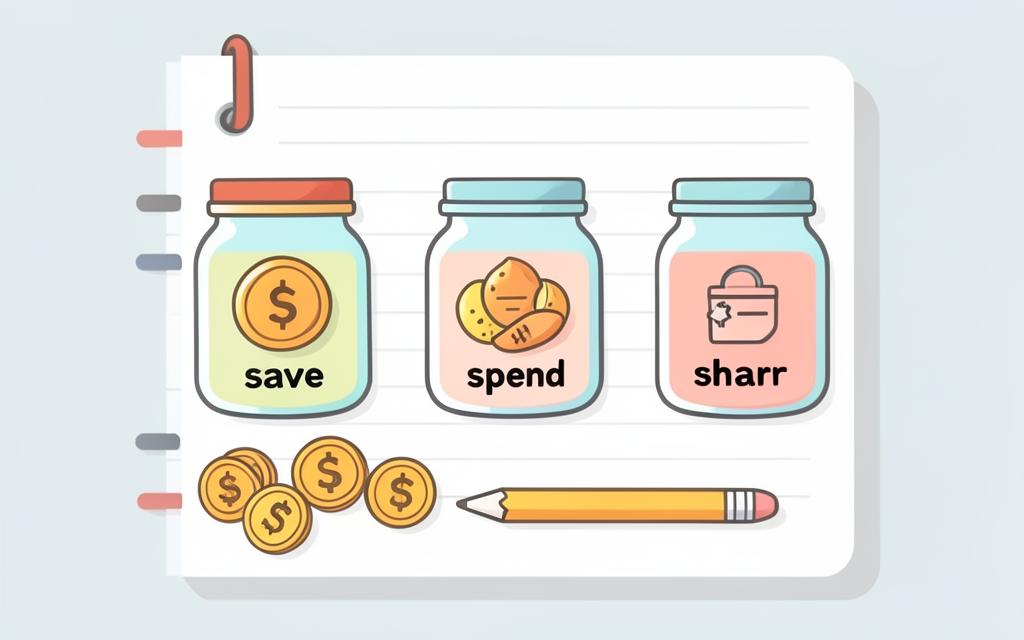
Money is a tool. The people who do well with it aren't the ones who have the most — they're the ones who pay attention to it. This section is about the three jobs every coin or mobile-money balance has: saving, spending, and sharing.
Needs vs wants
A need keeps you alive and learning (food, transport to school, data for homework). A want makes life nicer (airpods, snacks, games). Both are fine — the trick is knowing which is which BEFORE you pay.
The 3-jar habit
Every time money comes in, split it: some to SAVE (future you), some to SPEND (now), a little to SHARE or give. Even 10% saved builds a powerful habit.
Track it or lose it
Money you don't track disappears. Write down what comes in and what goes out for one week — most people find a 'leak' they never noticed.
The 24-hour rule
Want something that isn't a need? Wait 24 hours before buying. If you still want it tomorrow, decide. Most impulse buys die overnight.
Examples
Quick check
1. You get R200 (or 2,000 FCFA) for your birthday. What does the 3-jar habit say to do FIRST?
2. Which of these is a NEED?
✍️ Think about it
What did you spend money on this week? Mark each one N (need) or W (want). Any surprises?
Even airtime, snacks and transport count.
Saved on your phone — no one else can see it.
Mini project: My One-Week Money Tracker
Track every bit of money in and out for 7 days — then find your leak.
- 01
Make your tracker
Draw 3 columns in a notebook or notes app: DATE, WHAT, AMOUNT IN or OUT. Keep it where you'll see it daily.
- 02
Record everything for 7 days
Every coin, every mobile-money transfer, every snack. Small amounts count most — they're the ones that leak.
- 03
Label each line N or W
Need or want? Be honest. Nobody is grading you — this is data for YOUR decisions.
- 04
Find your leak
Add up your 'wants'. Which one would be easiest to cut in half next week? That's your leak — plug just that one.
- 05
Set one saving goal
Pick something real: 'Save R50 / 500 FCFA by month-end.' Write it at the top of next week's tracker.